Mansfield Is Writing Its Own Short-Term Rental Rules, and They Don't Work Like Ellicottville's
October 15, 2026
October 15, 2026
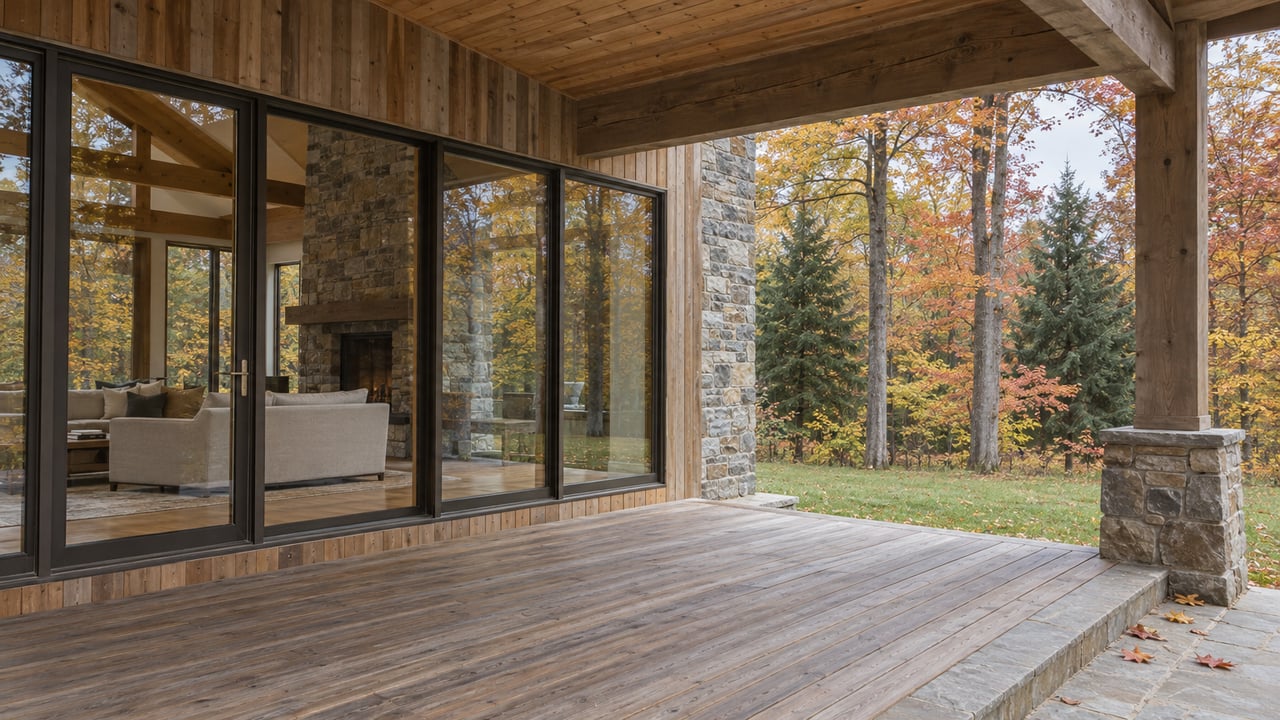
Picture a Mansfield farmhouse on a few acres. Behind it sits a converted barn with its own kitchen, and beside that a small guest cottage. Three separate places to sleep on one deed, a short drive from Ellicottville. For the past year, buyers who found the Town of Ellicottville's short-term rental rules tight have looked at properties like this one as the less restricted option next door.
Under the short-term rental law the Town of Mansfield now has under review, the parcel could carry one short-term rental. The farmhouse, the barn apartment, or the cottage, but only one, and the permit would name which one.
This is the part of the proposal that changes how a property pencils out. Ellicottville limits how many licenses the town issues. Mansfield's draft, as summarized in county review, limits what happens on each lot.
The fullest public description of the proposal so far comes from the Cattaraugus County Planning Board's August 27, 2026 meeting minutes, where the board reviewed Mansfield's "Local Law – Short Term Rentals" as a referral covering the entire town. According to that summary, short-term rentals would be allowed in each zoning district that permits dwelling units, with these limits:
The county board recommended approval with one modification, adding mention of CO2 detectors in rentals.
Those rules work together. The ban on combined listings closes off the obvious workaround of marketing the farmhouse and the cottage as one "estate" booking. The one-party rule closes off renting the main house to one group and the barn to another on the same weekend. The named-unit requirement means the town's permit attaches to a specific building.
The Town of Ellicottville's law, Local Law 1 of 2025, adopted February 19, 2025, is built on a different question: is this property someone's principal dwelling or a secondary one? It sets no limit on licenses for principal dwellings. For secondary dwellings, the maximum number issued each year is tied to the number issued in the first year after the law took effect.
That design creates a townwide queue. As of February 13, 2026, Ellicottville's code enforcement officer reported 266 short-term rental licenses, and Ellicottville Now reported that after the February 28 application deadline the town would pause to decide what the cap would be. Town Board minutes from August 19, 2026 record 308 licenses, without saying how many are for secondary dwellings or whether 308 is the cap.
Side by side, the two frameworks put the limit in different places:
| Town of Ellicottville (adopted 2025) | Town of Mansfield (draft, per county summary) | |
|---|---|---|
| What is limited | Annual number of secondary-dwelling licenses townwide | Number of rental units per lot |
| Principal vs. secondary home | Treated differently; no limit for principal dwellings | No distinction described in the county summary |
| Term | Expires every February 28 | Three years before renewal |
| Inspection | Building Official inspects for code compliance | Code enforcement inspection authorized |
| Units on one property | Not addressed in the sections reviewed here | One rental unit per lot, no combined listings, one party at a time |
In Ellicottville, the hard question for a second-home buyer is whether a secondary-dwelling license is available at all. The town's law also says a license cannot be transferred and expires automatically when the property is sold or transferred. The county's summary of the Mansfield draft describes no townwide count; the only numeric limits it lists apply per lot. The full text could contain provisions the summary leaves out, so this comparison rests on the county's description rather than the final law.
A per-lot rule mostly affects a specific kind of listing, which is why it is easy to miss. A buyer looking at a single-family home on its own parcel would see only one rental unit either way. The rule matters when one lot holds more than one place to live:
The other units keep some uses. The county summary says dwelling units not authorized as the short-term rental may still be used by the owner, by the owner's non-paying guests, or rented for stays of 30 days or longer.
So a second unit on a Mansfield lot would not stop earning income. It would earn a different kind. A barn apartment could still go to a ski-season tenant on a monthly lease, or host family on a holiday weekend while the main house is booked. What it could not do, under the draft, is run as a second nightly rental alongside the first. A seller's projections that show nightly income from two or three units on one parcel would be modeling a use the proposed law does not allow.
The decision about which unit to designate becomes part of the purchase. The larger main house might command higher nightly rates. The smaller cottage might suit short stays while the owner uses the house. That choice used to belong to whoever was managing bookings. Under the draft, it is written on a town permit.
One more provision deserves a close read if a property sits within a planned unit development, or PUD. The county summary says short-term rentals would be permitted in PUDs only if the PUD's approval record clearly establishes short-term rental use.
That shifts the question from the property to the paperwork behind it. For a lot in a Mansfield PUD, whether nightly rentals are allowed would depend on what the town approved when the development was created, not on what a listing description or a neighbor's booking calendar suggests. The approval record is a municipal document, and the town's planning and code offices are where it would be found.
The proposal has moved quickly this year. Here is the public record so far:
Until an adoption record appears, the most accurate description is a proposed law under review. Even after a town board votes, New York's Department of State explains that adopted local laws must be filed within 20 days and do not take effect until they are filed. Several details that matter to a buyer have not appeared in any public summary yet, including permit fees, an effective date, and how rentals already operating would be treated. One line in the county minutes about waiting a year after a revocation is worded unclearly, and the final text will settle what it means.
The town's next scheduled meetings are an October 19 regular board meeting, a November 2 public hearing on the proposed budget, and a November 16 regular meeting.
For anyone evaluating a Mansfield property with more than one dwelling on the lot, the useful questions for the town clerk or code enforcement office are specific. Has Section 9.14 been adopted and filed? Which unit, if any, holds a permit? Is the property part of a PUD, and does its approval record address short-term rentals?
If you're weighing a Mansfield property with a cottage, a barn apartment, or a second unit and want to work through how the proposed rules could apply to it, I'd be glad to help you sort out the questions before you make an offer. Jennifer Courtney follows these town decisions closely and can help you put the numbers in context. Let's Connect.
This article is general information, not legal, tax or financial advice. Consult a qualified professional about your situation.
Stay up to date on the latest real estate trends.

Whether you're buying your first home, searching for a second home in the mountains, investing in Ellicottville real estate, or preparing to sell, Jennifer Courtney is here to make the process feel clear and manageable. With a thoughtful, personal approach and a deep appreciation for the local market, she takes the time to understand what you're looking for and provides guidance tailored to your goals. From the initial conversation through closing, you'll have an experienced advocate who is ready to listen, communicate, and help you move forward with confidence.
(716) 998-1126
[email protected]
3400 SOUTHWESTERN BLVD
ORCHARD PARK, NY 14127