The Ellicottville Short-Term Rental License Doesn't Come With the House
September 10, 2026
September 10, 2026
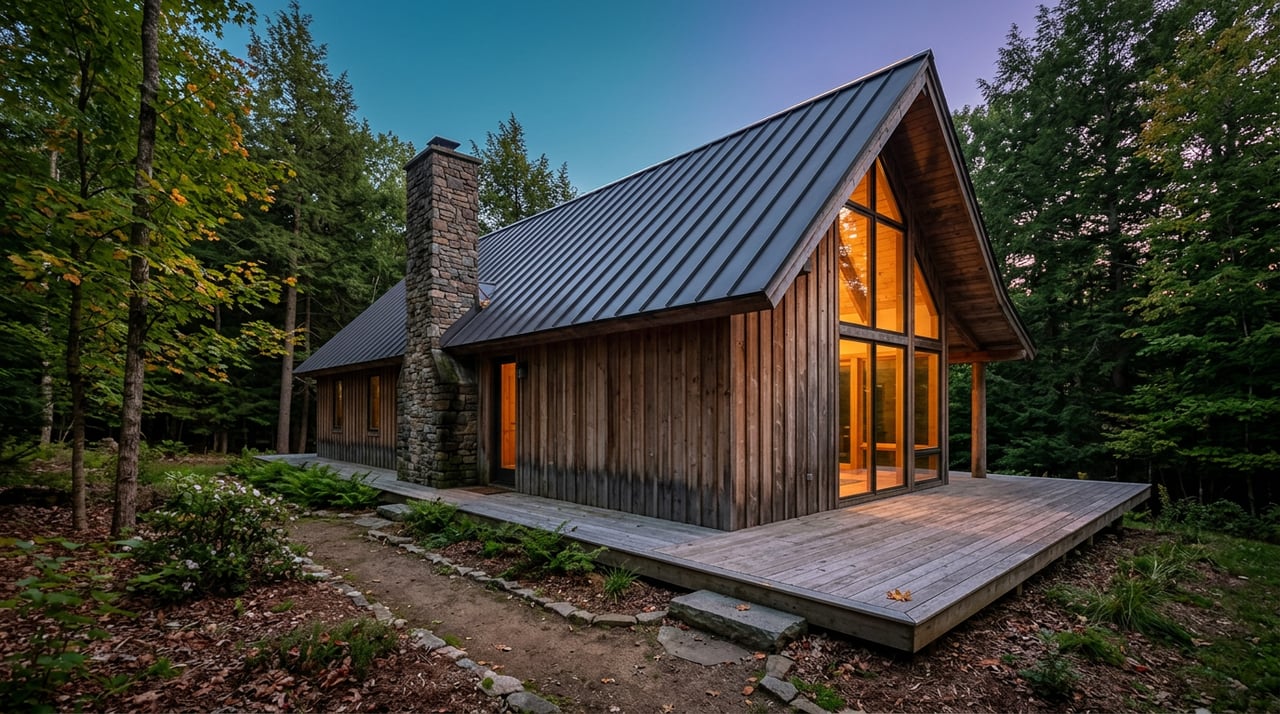
A listing photo of a snug A-frame near Holiday Valley, followed by a screenshot showing three years of steady Airbnb bookings, is a persuasive combination. It suggests the hard part is already done. Buy the chalet, keep the calendar full, collect the income the previous owner was already collecting.
That assumption runs into a specific piece of Ellicottville regulation that most out-of-area buyers never think to ask about until they are already under contract. The short-term rental license attached to that property is not a feature of the house. It belongs to the person who applied for it, and under the Town of Ellicottville's current rules, it stays with them.
Local Law 1-2025, adopted by the Town Board on February 19, 2025, rewrote how short-term rentals work in the Town of Ellicottville. Buried in the licensing section is a line that changes the math on every "turnkey rental" listing in town: a short-term rental license "may not be transferred, does not run with the land, and is valid only at the original short-term rental location." It also expires every February 28, regardless of when it was issued.
In practice, that means a buyer cannot simply close on a property, keep the seller's existing Airbnb listing live, and pick up where the previous owner left off. The new owner has to apply for a license under their own name, submit a site plan, a floor plan showing bedrooms and exits, a parking plan, and proof of a local contact person available around the clock who can reach the property within an hour of a complaint. The property also has to pass a fresh safety inspection covering smoke detectors in every sleeping area, carbon monoxide detectors near sleeping areas and fuel-burning appliances, and fire extinguishers at exits and in the kitchen. None of that transfers with the seller's signature at closing.
Part of what makes this confusing is that "Ellicottville" refers to two overlapping but legally distinct jurisdictions, and each one runs its own short-term rental program.
| Village of Ellicottville | Town of Ellicottville | |
|---|---|---|
| Governing rule | Village STR permit ordinance | Local Law 1-2025, adopted Feb. 19, 2025 |
| License required | Yes, before renting under 30 days | Yes, before renting under 30 days |
| Runs with the property? | Tied to the licensee; public documents do not describe a transfer process | Explicitly no |
| Density limits | None specified in Village rule | 15% of lots per block in R-1, R-2, R-3 zones |
| Local contact requirement | Yes | Yes, must respond within one hour |
| Noise standard | Local Law No. 6 of 2006 | Nuisance and noise provisions under Town code |
A property just outside the Village line and inside the Town falls under the density cap and the primary/secondary distinction described below. A property inside the Village boundary answers to the Village's own permit process, which includes its own signage rules and a fine schedule that starts with a warning before moving to fines around $500 to $1,000 per instance depending on the violation. Fines in the Town run higher, from $1,000 to $4,000 depending on severity and how many times a property has been cited. And properties in the town of Great Valley, a short drive from the village, fall under neither of these frameworks, since Great Valley is a separate town with its own zoning.
Before writing an offer on anything advertised as a short-term rental, the first question is which jurisdiction the parcel sits in, because that answer determines which rulebook applies to the buyer, not just the seller.
Local Law 1-2025 introduced a density cap limiting short-term rental permits to no more than 15% of total lots on any given residential block. That provision was written with areas like Wildflower in mind, the compact, STR-dense community across from Holiday Valley where short-term rentals have historically clustered.
In spring 2026, the Town Board went further and set a townwide ceiling of 375 short-term rental licenses total. That number was not written into the original 2025 law. It came out of Town Board discussion more than a year after the licensing system launched, once there was a real pool of applications to measure against. For a buyer eyeing a secondary residence with rental income in mind, that cap is the difference between a straightforward application and a waiting list, particularly on a block that already sits near its 15% threshold.
This is the part of the transaction that a listing sheet cannot answer. Whether a given block still has room under the 15% cap, and whether the townwide 375-license ceiling still has room at all, are questions with answers that change month to month. They belong on the same due diligence list as a septic inspection or a well test, not as an afterthought after closing.
The Town's licensing system treats two owners of an identical house very differently depending on how they use it.
An owner who lives in the property at least 184 days a year qualifies as a primary residence and can obtain a license without competing against the cap. The Town's fee schedule and residency proof requirements apply, but availability is not the issue.
An owner who intends to use the property as a vacation home or pure investment property, renting it out while living elsewhere most of the year, is classified as a secondary residence. Secondary-residence licenses are the ones subject to the cap. If the townwide or block-level limit is already reached, a secondary-residence applicant may simply not be able to get a license this cycle, regardless of how well the house shows or how clean its inspection history is.
For a buyer whose plan is "live here part of the year, rent it the rest," this distinction is worth working through with a local advisor before making an offer, not after. The number of days a buyer actually plans to occupy the property changes which side of the cap they land on.
Third-party short-term rental data platforms all publish Ellicottville performance numbers, and they do not agree with each other. One platform's 2026 data shows roughly 37% occupancy with an average daily rate near $436. Another puts occupancy at the same 37% but average daily rate closer to $327. A third shows occupancy as low as 23.3% with an average rate around $321.
These are not small rounding differences. They come from different data sets, different sampling methods, and different definitions of what counts as an active listing. A buyer who anchors an offer to whichever number looks best is pricing the deal on a guess dressed up as data. The more useful exercise is asking the current owner for actual booking records and tax filings tied to the property itself, since that is the only number specific to that address rather than to a townwide average built from hundreds of very different properties.
Ellicottville also applies a 4% occupancy tax on short-term rental income, which factors into the real return regardless of which occupancy estimate a buyer chooses to believe.
A short list worth working through with a local agent before submitting an offer on any Ellicottville property marketed with rental income:
Does an existing Airbnb license transfer to a new owner? No. Under Local Law 1-2025, a Town of Ellicottville short-term rental license does not run with the land and cannot be transferred. A new owner has to apply and be approved on their own.
What if the property is inside the Village instead of the Town? The Village of Ellicottville runs a separate STR permit process with its own application, signage rules, and noise standards tied to the Village's 2006 noise ordinance. Confirming which jurisdiction a specific parcel sits in is a necessary first step.
Is there a cap on how many short-term rentals can operate? Yes, in the Town. A 15% per-block density limit applies in residential zones, and the Town Board set a townwide ceiling of 375 total licenses in spring 2026. Both figures are worth confirming directly with the Town before assuming a license will be available.
Does living there part of the year help? It can. Occupying the property at least 184 days a year qualifies an owner for a primary-residence license, which is not subject to the secondary-residence cap.
Rental income potential is a legitimate reason to consider property in Ellicottville, and the four-season draw of the village and the mountain behind it is real. The mistake is treating a license and a booking calendar as fixtures of the house rather than as something a new owner has to earn on their own terms. Working through the jurisdiction, the cap, and the residency math before an offer goes in saves the kind of surprise that shows up after closing, when it is far harder to fix.
If you are weighing a short-term rental purchase in Ellicottville or want help sorting out which rules apply to a specific address, Jennifer Courtney can walk through the jurisdiction, the current licensing landscape, and what a given property can realistically support. Let's Connect.
Stay up to date on the latest real estate trends.
Whether you're buying your first home, searching for a second home in the mountains, investing in Ellicottville real estate, or preparing to sell, Jennifer Courtney is here to make the process feel clear and manageable. With a thoughtful, personal approach and a deep appreciation for the local market, she takes the time to understand what you're looking for and provides guidance tailored to your goals. From the initial conversation through closing, you'll have an experienced advocate who is ready to listen, communicate, and help you move forward with confidence.
(716) 998-1126
[email protected]
3400 SOUTHWESTERN BLVD
ORCHARD PARK, NY 14127